
The Hazelnut Tree
Care, women's knowledge, and the labour that holds environmental work together

This morning, while kneading dough for the week’s bread, I found myself thinking about war, survival, and a hazelnut tree someone was trying to steal from me in a dream. Outside on the deck, Burrito the cat had claimed a cushion in the shade and was sleeping in that loose, satisfied way cats do when the world feels safe.
While the dough rested, I remembered a dream from the night before. In it I had just finished giving a presentation about resilient communities. R was there and told me it was the worst presentation of the day. Even in the dream it stung. I made a mental note to tell her about it later and laugh it off.
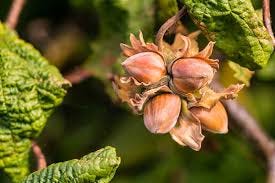
It reminded me of another dream she woke me from recently. In that one I was fighting Donald Trump, who was trying to steal my hazelnut tree.
Dreams are strange like that. They braid together the things we care about and the things we are afraid of losing.
Today is International Women’s Day. As I shaped the loaves on the bench, I found myself thinking about women far away from my small rural home in New Zealand. Women surviving war. Women grieving losses that no one should have to carry. Women mark each day they are still alive as a small victory.
Closer to home, I know there will also be women in my own community quietly calculating their own survival. Women and children living with violence, working out how to get through the day, how to leave, or how to stay safe until they can.
As a survivor, I know these realities never fully leave us. My healing journey has been long. My ability to compartmentalise is well practised.
There was a time when International Women’s Day meant something different to me. I organised events. I spoke loudly about the injustices of patriarchy. I felt the urgency of naming what was wrong.
But over time, I noticed something shifting. The day was slowly folded into corporate calendars. The conversation moved toward how women could compete better, negotiate better, and succeed better within systems that had always undervalued us.
It began to sound like a lesson in how to become more like our male colleagues. As if equity could be achieved by improving our individual performance inside structures that were never designed for us in the first place.
What speaks louder to me now is something simpler and closer to the ground.
It is the reality that we have to fight to protect our local food systems, even though the knowledge we carry is still dismissed as sentimental or impractical.
Many of us are relearning customs and practices that once sustained whole communities, so the food we grow, share and eat is nutritionally dense and culturally significant. So, the love and care we show with food is most holistically complete.
All around me, there are still women and children living with fear, carrying pain that rarely appears in conversations about equality. Across the world, women are dying in wars and regimes we did not create.
Women’s knowledge is still written off as folklore or mythology.
And we remain, too often, the targets of patriarchal angers.
Standing in the kitchen this morning, hands dusted with flour, I felt the strange closeness of it all, my dreams and memory, bread rising on the bench, the cat asleep on the deck, and the quiet understanding that women everywhere are still holding together worlds that were not built to hold us.
Much of that work happens in places that are easy to overlook.
Kitchens. Gardens. Community halls. Conversations that stretch long after meetings have officially ended.
It is the work of noticing, tending, remembering, and holding relationships together.
In Aotearoa, wāhine Māori have long carried this understanding through mātauranga and the responsibilities of kaitiakitanga, where care for land and care for people are inseparable. These traditions recognise something many modern institutions are only beginning to rediscover: that environmental stewardship is not simply technical management. It is a relationship.
"Women are the human counterpart of Papatūānuku." Dr Ngahuia Murphy
Environmental work, at its heart, rests on that same foundation.

It requires people who can listen deeply to communities, hold grief for damaged ecosystems, and patiently rebuild trust between people, land, and institutions.
Much of that work is relational.
And much of it continues to be carried quietly by women as we carry life, not as an optional extra for which we clock in and clock out, as a rhythm that dances through us when we connect with the earth. Our work may be to care, but first and foremost, it is to protect.
Once upon a time, the people of our Celtic nations knew that our fate is inseparable from the fate of the land we live on… There is a Gaelic word for it. In Irish, the word is dúchas; in Scottish Gaelic, dùthchas. It expresses a sense of belonging to a place, to a certain area of land; it expresses a sense of rootedness, by ancient lineage and ancestry, in the community which has responsibility for that place." Sharon Blackie
Across the environmental sector today, women make up a large proportion of the workforce, particularly in early and mid-career roles. Yet at senior levels, where authority and resources sit, representation often narrows.
This pattern reflects a wider social dynamic. Work grounded in care, listening, relationship-building, and stewardship has long been undervalued in systems that reward extraction, speed, and measurable outputs.
When an environmental educator stays after a meeting to listen to a community member worried about a river, when a Lead holds a team together through the emotional weight of ecological loss, that is leadership.
When our teams maintain relationships across iwi, communities, agencies, and organisations, they are doing governance in practice.
An intersectional lens also reminds us that this labour is not experienced equally.
For wāhine Māori, the environmental sector often draws on Indigenous knowledge while still under-resourcing Indigenous leadership. Honouring mātauranga means recognising that this knowledge carries its own governance traditions, responsibilities, and authority.
Disabled women also bring perspectives that strengthen environmental work. Many speak of a heightened awareness of interdependence — how bodies, communities, and ecosystems rely on care and adaptation. These insights sit naturally alongside ecological thinking.
Yet disabled practitioners often encounter institutional barriers: inaccessible expectations, rigid work structures, and cultures that equate value with constant productivity rather than sustained contribution.
"It's a contract you see, people and the land. You care for it, and it cares for you." Saron Blackie
Which brings us to a deeper question about how our systems are designed.
Many labour systems assume fairness is something workers must organise and struggle to achieve. If recognition is missing, people must mobilise, negotiate, and build power to change the rules.
But the rules of a system are rarely written by those most affected by them.
When justice depends on navigating systems that were never designed with you in mind, equity will always remain uneven.
In Aotearoa, the constitutional thinking emerging through Matike Mai offers one vision of this shift. It proposes governance grounded in relationship, shared authority, and collective wellbeing.
Within such frameworks, justice is not something people must struggle to extract from institutions. It is something institutions are designed to uphold.
Applied to the environmental sector, this means recognising relational labour as central rather than peripheral. It means valuing the knowledge traditions that sustain ecological relationships. And it means building organisations where care, stewardship, and responsibility to future generations are reflected not only in mission statements, but in how work itself is valued.
Because environmental care has always been relational work.
It has always required attention, patience, and responsibility carried across generations. Women have long held much of this labour — from the ecological knowledge of communities to the everyday work of sustaining trust between people and place.
Wāhine Māori continue that leadership through mātauranga and kaitiakitanga. Disabled practitioners remind the sector that care, interdependence, and adaptation are not weaknesses but strengths.
"Mana wahine is informed by tikanga, mātauranga and te reo Māori and it is through this lens that we are able more deeply come to understand issues faced by Māori women and in doing so to reclaim and reassert our place on our own lands. This is both a movement and a theory that has at its centre the resurgence and reaffirmation of the mana of Māori women, past, present and future. This is particularly critical in a context where as Indigenous women we live with the impacts of imposed colonial heteronormative gender ideologies that seek to deny the sacred standing that is inherently ours." Professor Leonie Pihama.
If the environmental sector is serious about the future it speaks of, its institutions must reflect those same values.
Because protecting the living world will always depend on the people who care for it.
And this morning, while the bread rose on the bench and Burrito slept on the deck, the trees stood quietly in the garden where they belong, a small reminder that what we tend, what we protect, and what we refuse to let be taken matters more than we sometimes realise.